
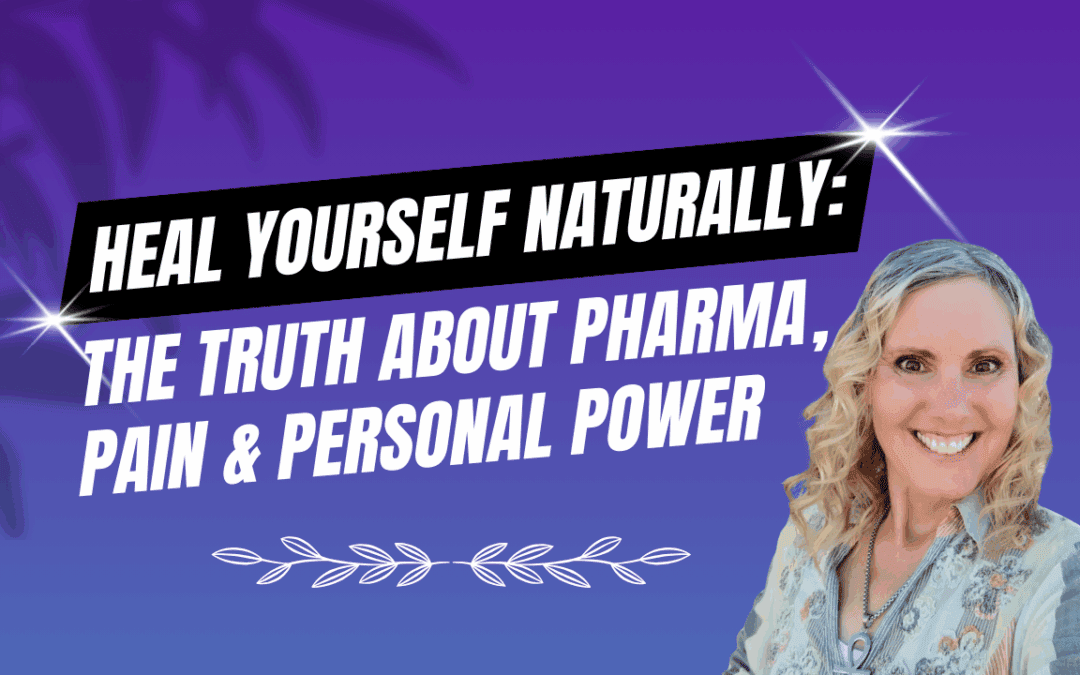
When Healing Turns You Inside Out: Sarah Dawkins’ Journey From Hospital Protocols to Self-Healing
Sometimes life flips your beliefs upside down so it can finally set them right.
For 41 years, Sarah Dawkins lived by the book, the medical book. Raised by a nurse, trained as one herself, she believed what many of us are taught to trust: when you’re sick, you see a doctor, get a diagnosis, take the medication, manage the condition, repeat.
Then an ordinary question cracked her worldview.
A colleague asked why she reached for pharmaceuticals at home so quickly. It wasn’t an argument, just a nudge. But it was enough to spark a quiet rebellion in Sarah’s mind: Why do I believe what I believe about healing? That one moment nudged her off autopilot and into a chapter that would rewrite her life.
This is the story of how a nurse became an award-winning entrepreneur, best-selling author, globally recognized podcaster, and advocate for the body’s ability to heal.
Important note: This is Sarah’s experience and philosophy, not a substitute for medical care. If you’re navigating a health condition, work with qualified professionals and make informed choices that fit your situation.
The Turning Point: Unlearning What She Knew
Sarah began reading, nutrition research, inflammation, stress, and the nervous system, the mind–body connection. She didn’t go extreme. She started small, changed a few foods, slept a little better, hydrated on purpose, and moved more.
Within a month, the “unfixable” started shifting. Psoriasis and eczema settled. Acid reflux quieted. These were conditions she’d been taught to manage, not change. Suddenly, her own body was presenting new data.
That didn’t make Sarah anti-medicine. It made her pro-possibility.
“If my body can knit skin and heal a bruise without my permission,” she wondered, “what else might it do with my cooperation?”
The Dark Night: Depression, Treacle, and Dog Walks
Then life got louder. Conflict between her medical training and new discoveries triggered a deep depression. Her thyroid under-functioned; her adrenals burned out. The option to medicate was on the table. She’d tried it before and felt numb. This time, she listened to a quieter instinct.
Two daily dog walks became non-negotiable. Fresh air. A path. Paw prints. Somewhere along those routes, mindfulness found her. One day, she looked up: spring buds, a thin ribbon of river, wind in the trees, children laughing. Gratitude slipped in. She started five minutes of guided meditation, but sitting in silence was too hard at first. Five minutes became ten. The noise in her head didn’t vanish, but she found a gap between thoughts where peace could breathe.
It wasn’t a miracle. It was practice.
What If Symptoms Are Messages?
As Sarah continued, a pattern emerged. When stress spiked, tiny rashes might return. Instead of panicking, she asked, What is this trying to tell me? In her words, symptoms became messengers, not enemies. They were signals to adjust what she was doing, thinking, or holding.
She noticed the same with clients. When people got curious, not combative, with their symptoms, they uncovered levers, sleep debt, emotional weight, overwork, unresolved conflict, that, when shifted, often softened the body’s alarms.
Four Pillars Sarah Uses to Support Healing
Out of years of recovery, coaching, and conversations, Sarah distilled a simple framework. It’s not flashy. It’s foundational.
1) Physical: Inputs Your Body Understands
Nutrition that calms inflammation. Real hydration. Enough sleep. Daily movement you’ll actually do. Boring beats brilliant when brilliant isn’t sustainable.
2) Mental: How You Aim Your Attention
Gratitude, mindfulness, learning. Not positivity theater, awareness training. Crosswords, books, new languages all count. A curious brain is a resilient brain.
3) Spiritual: The Quiet Inner Compass
Call it intuition, prayer, or higher self. It’s the calm voice under the shouting ego. Meditation helps you hear it. Creative practices help you trust it.
4) Emotional: The Weight You Don’t Know You’re Carrying
Old pain and limiting beliefs keep the nervous system stuck on high alert. You don’t have to excuse what happened to release it. If forgiveness isn’t available, aim for acceptance: “This happened, it doesn’t get to run my life now.”
Through-line: stress fuels inflammation, and inflammation fuels a lot of suffering. Reduce the fuel, and the fire often calms.
Medicine and Natural Methods: Removing the Either/Or
Hospitals save lives. Full stop. Sarah’s stance isn’t anti-doctor. It’s pro-agency. Use diagnostics and expert care. Also, own the part of healing that only you can do.
Questions she loves:
- Is medication my only option, or one of several?
- What lifestyle changes would help the most for this condition?
- What’s in my control today, and what isn’t?
Labels can be helpful, until they become cages. Know your data. Don’t let a diagnosis become your identity.
The Book That Became a Movement
When Sarah felt better, she began writing. Then imposter syndrome shouted, Who do you think you are? The draft sat on her hard drive for five years.
One morning, she woke with clarity. Finish it, and include others. She invited stories from around the world. Seventy-four people said yes. The result is Heal Yourself, real people describing how they supported their bodies through shifts in food, thought, emotions, environment, and belief, sometimes alongside conventional care, sometimes after it stalled.
Some accounts stretched Sarah’s imagination, recoveries from conditions widely considered irreversible. Common threads weren’t magic protocols. They were mindset, boundaries, consistency, and fiercely curating influences, especially during the vulnerable middle of change.
Readers tell Sarah the biggest takeaway isn’t just “healing is possible.” It is empowerment, the courage to make overdue life choices, health-related or not.
The Hardest Identity to Heal: “Sarah the Nurse”
All Sarah ever wanted was to help people when they were vulnerable. “Nurse” wasn’t a job. It was her identity. Letting go felt like losing a limb.
She didn’t leap; she sidestepped, first as a nurse entrepreneur, then into coaching and podcasting. Layer by layer, she peeled back personas she’d worn to be liked or “good.” Underneath, she found the free-spirited original, tenacious, a little rebellious, heart-forward. That’s the woman who now runs ST Essential Health, hosts her podcast, and meets people where they are, not with orders, but with options.
If You’re Starting Today, Start Like This
- Audit your stress. Two columns: Mine to control and Not mine to control. Move your energy to column one.
- Pick one physical habit. Water before coffee. A protein-forward breakfast. A 20-minute walk. A bedtime alarm. Nail it. Then stack another.
- Five minutes of guided stillness. YouTube, an app, whatever you’ll do. This is nervous system training, not doing nothing.
- Do one thing that lights you up, daily. Walk the dog, sketch, garden, sing in the car. Joy is medicine.
- Track your triggers. When you snap or spiral, ask: What belief is being protected? Where did I learn it? Do I want to keep it? Not every thought is true, especially the loud, scary ones.
Attention Is a Currency, Spend It Like It Matters
- Stop spending it on other people’s scripts, doom-scrolls, and the chorus telling you you’re “weird” for wanting something better.
- Invest it in your inner weather, your thoughts, your nervous system, your daily inputs. When those shift, your body often follows.
Why Sarah Shares This, and Why It Resonates
Because she’s been both people, the clinician handing over a prescription and the woman walking a trail, trying to find her way back to herself. She knows the power of both worlds. Her work lives in the bridge, the place where data and intuition shake hands, where responsibility replaces helplessness, where healing becomes a skill you practice.
The body you’re living in isn’t working against you. It’s talking to you. If you’re ready to listen, you might be amazed at what it says, and how it heals.
Explore Sarah’s world:
- Book: Heal Yourself
- Work: ST Essential Health, coaching, courses, community
- Podcast: conversations with people who’ve rebuilt from the inside out
If this story sparked something in you, send it to someone who needs a reminder: you’re not broken, you’re becoming.