
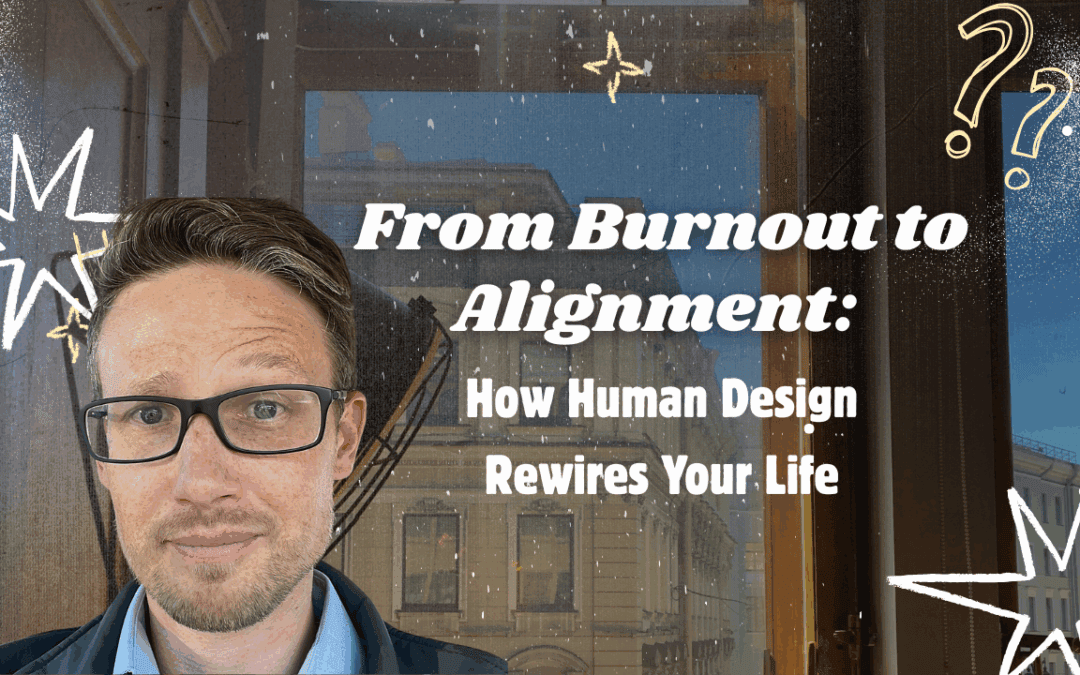
When Life Pushes You Off the Cliff: How a Mountain Fall Unlocked a New Way to Live
Sometimes life has to break us open before it can reveal what’s really inside. Jonathan McClean quite literally fell down a mountain. What looked like the end became the beginning of an extraordinary chapter built on resilience, radical self-acceptance, and a practical framework called Human Design.
This is his story, and the playbook you can borrow from it.
The fall that rewired everything
Jonathan was trekking the Annapurna Circuit in Nepal with a group of travelers. He remembers a high, wind-whipped suspension bridge. He remembers a split-second during the fall. And he remembers a voice.
“Just let go.”
Then impact. A cracked skull. Dislocated shoulder and elbow. Three limbs are temporarily paralyzed. A week of missing memories. A hospital bed in Kathmandu.
Here’s the deal. Jonathan had built a life on overgiving. People-pleasing. Earning love by being everything for everyone. Flat on his back with a body that wouldn’t cooperate, he had to receive. No fixing. No performing. No “I’ve got it.” He describes it as moving from pouring out an empty cup to rebuilding an overflowing one.
That mindset shift didn’t erase the pain. There were nights of sobbing, blunt diagnoses about nerve damage, and no guarantees. But his compass locked onto a simple truth: above the clouds, the sky is blue. Keep going.
Attention is a currency: spend it on who you are, not who you’re told to be
Jonathan’s recovery wasn’t just physical. It was an audit of identity. Which parts were authentic? Which parts were borrowed? Which patterns had kept him safe when he was five but were strangling his potential at thirty-five?
That audit eventually led him to Human Design. Not as dogma. As a language for what he already knew in his bones and couldn’t articulate.
Human Design, no fluff
Human Design blends elements from the chakra system, astrology, the I Ching, Kabbalah, and modern physics into a personal operating manual. The point is not to make you someone else. It’s to hand you a permission slip to be exactly who you are, sustainably.
Two pieces matter most at the start:
- Energy Type: how your energy naturally works in the world
- Authority: how you make your best decisions
Jonathan is a Projector, which means he thrives by being recognized and waiting for invitations to share his guidance, rather than forcing outcomes. Before Human Design, he pushed. He initiated. He burned out. After Human Design, he experimented with a different approach and noticed a pattern. The jobs, relationships, homes, and business opportunities that stuck had always come through clear invitations.
He stopped swimming against his current.
“Everything that really worked for me came when someone opened a door and said, come in.”
That small distinction changed the game.
The permission you’ve been waiting for
Jonathan has now read hundreds of charts through his company, Osprey Guide, and the theme is consistent. Human Design doesn’t cram you into a box. It confirms the box you never fit into was never yours.
Examples:
- A Manifesting Generator client had spent years shaming herself for “not focusing” and keeping ten tabs open at once. Her chart showed she’s built to multitask. The moment she stopped fighting that, her creativity surged.
- Another client carried a “life theme of the unexpected.” She wasn’t broken. Her life was designed to evolve through surprises. Naming it turned chaos into data and anxiety into agency.
What most people call flaws often turn out to be native strengths used in the wrong context.
Mindset is the multiplier
After trauma, mindset is not a motivational poster. It’s oxygen. Jonathan learned to edit his attention with surgical precision. Eliminate inputs that pull you into fear. Choose language that reshapes reality. Years ago he cut the word “hate” from his vocabulary. Within months, his internal weather changed.
Where attention goes, reality grows.
You can cling to a narrative that the world is out to get you. Your brain will oblige by gathering evidence. Or you can adopt the stance Jonathan did on that mountain. Clouds exist. But the sky is still blue behind them. Choose your lens, then defend it.
Practical ways to align with your design
Most people don’t need a life overhaul. They need a few non-negotiables that keep them in their lane. Start here.
1) Learn your Energy Type
- Generator or Manifesting Generator. Your power is response. Notice what life puts in front of you. If your gut lights up, say yes. If it drops, it’s a no.
- Manifestor. You initiate. Inform the people affected, then move. Your energy clears paths.
- Projector. You guide. Build mastery, share value, and accept invitations where you’re seen and respected.
- Reflector. You mirror your environment. Take a full lunar cycle before major decisions, and curate your spaces like your life depends on it, because it does.
2) Honor your Authority
This is your decision-making GPS. It might be your gut, your emotions over time, your instincts, ego commitments, self-projected clarity, or mental clarity in the right environment. Use your signal, not your neighbor’s.
3) Reframe your “flaws”
Make a two-column list. On the left, write traits you’ve been criticized for. On the right, write where that trait is an asset. Multitasking. Sensitivity. Slow pace. Intensity. Each has a context where it’s gold. Your job is to place it where it compounds instead of corrodes.
4) Build a gratitude loop with your past self
Thank the protective patterns that kept you safe. People-pleasing. Hypervigilance. Overachieving. Then retire them with respect. You can appreciate who you were and still step into who you are.
5) Protect your inputs
Unfollow accounts that inflame scarcity, outrage, or comparison. Replace them with voices and environments that regulate your nervous system and reinforce your design.
Relationships, reset
Jonathan’s flagship course is Relationship Preparation, a 99-day sprint that starts with the most important relationship you’ll ever have: the one with yourself. Heal formative stories. Build emotional literacy. Then apply Human Design to how you partner.
Truth is, love without self-knowledge is fragile. Self-knowledge without application is wasted. Put them together and you get something rare: intimacy that lasts because it’s aligned.
The hard-earned lesson
On the flight to Nepal, Jonathan set an intention. “I want as much personal growth as possible.” He got what he asked for. Careful what you call in. Better yet, be specific. Growth through clarity and ease beats growth through catastrophe.
And if life knocks you off the ridge anyway, remember the voice that met him mid-air.
“Just let go.”
Let go of who you were told to be. Let go of the timelines that were never yours. Let go of forcing doors that don’t fit your frame. There’s another way to live, one that spends your attention on your actual blueprint.
If you’re serious about alignment, do this today
- Look up your Human Design chart. Note your Energy Type and Authority.
- Pick one behavior that matches your type and run a seven-day experiment.
- Say no to one thing that drains you and yes to one thing that lights you up. Track how your energy changes.
- If relationships are your growth edge, commit to a structured practice. You’ll move faster with a map.
Most people chase “fixing what’s wrong.” Winners amplify what’s right and design from there.
Jonathan didn’t invent your strengths. He helps you see them, trust them, and build a life that uses them on purpose. That’s the work. That’s the invitation.
And if you’re reading this, consider it yours.